
Digital marketing for small businesses in 2026 is the lifeline for growth and visibility. Are you a small business owner struggling to grow your brand online? You’re not alone. In 2026, digital marketing is the lifeline of small businesses. Consumers no longer rely on word-of-mouth or flyers—they search online, compare options, read reviews, and make decisions in minutes. If your business isn’t visible online, you’re leaving money on the table.
Digital marketing helps you:
- Reach more customers without spending a fortune
- Compete with bigger brands on a level playing field
- Build credibility and authority in your niche
- Track results in real-time, so every rupee counts
In this guide, we’ll cover everything a small business needs to know about digital marketing in 2026: SEO, social media, content marketing, email marketing, paid advertising, and more. You’ll also get step-by-step strategies, examples, and actionable tips you can implement immediately.
By the end of this guide, you’ll know how digital marketing for small businesses can generate leads, increase traffic, and grow sales online—without wasting time or money. Whether you’re just starting or looking to improve your current strategy, this guide is built for practical results.

What is Digital Marketing?
Digital marketing is the strategic practice of promoting a business online through various channels to attract, engage, and convert potential customers. Unlike traditional marketing methods, which are often expensive and hard to measure, digital marketing offers measurable results, precise targeting, and the flexibility to optimize campaigns in real time. For small businesses, this makes it an essential component of any growth strategy in 2026.
At its core, digital marketing for small businesses allows small businesses to reach the right audience at the right time, regardless of geographical limitations. A well-executed online marketing strategy ensures that your brand is discoverable by people actively searching for your products or services, giving you a competitive advantage over local and larger competitors.
One of the major benefits of digital marketing for small businesses is the ability to track performance and ROI instantly. With tools like Google Analytics, Rank Math, and Ubersuggest, small businesses can monitor website traffic, engagement, and conversion metrics. This level of visibility allows you to make data-driven decisions, fine-tune campaigns, and allocate marketing budgets more efficiently—something that traditional offline marketing cannot offer.
Another key advantage is the opportunity to continuously optimize campaigns. Whether it’s tweaking ad copy for paid campaigns, improving SEO for better Google rankings, or refining email marketing sequences, digital marketing provides actionable insights that can directly impact results. This adaptability ensures that your business can respond to market trends and customer behavior effectively.
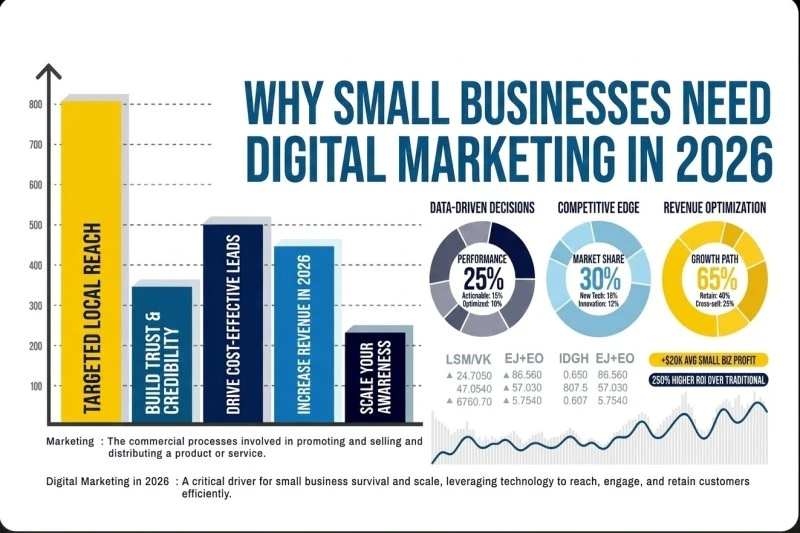
Why Small Businesses Need Digital Marketing in 2026
In 2026, digital marketing for small businesses is no longer optional—it’s essential. Consumers are increasingly turning to Google, social media, and online reviews before making decisions, even for local services. If your business isn’t visible online, you’re missing out on potential customers.
One of the biggest advantages of digital marketing for small businessesis the ability to reach your audience exactly when they are searching for your products or services. Unlike traditional marketing, which is limited by location and budget, digital channels allow you to connect with the right people at the right time. For example, a small café that optimizes its website for local search terms and shares engaging content on social media can attract customers who are actively looking for what it offers—without spending a fortune on flyers or billboards.
Digital marketing also helps small businesses compete with bigger brands. With smart strategies like SEO, content marketing, and social media engagement, even businesses with modest budgets can outrank larger competitors in local searches. Consistency, quality content, and targeted campaigns are often more effective than sheer marketing spend.
Cost-effectiveness is another reason small businesses should embrace digital marketing for small businesses. Platforms like Google Ads or Meta Ads allow businesses to control budgets and only pay for results. Similarly, email marketing enables personalized communication with your audience at a fraction of the cost of traditional campaigns, making it possible to generate leads and sales efficiently.
Finally, digital marketing builds trust and authority. Sharing helpful blogs, videos, or behind-the-scenes stories shows potential customers that your business knows its craft. Over time, this positions your brand as a reliable choice, encouraging repeat visits and referrals.
The beauty of digital marketing is its measurability. Tools like Google Analytics, Rank Math, and Ubersuggest provide real-time insights into traffic, engagement, and conversions. This allows small businesses to adjust campaigns on the fly, ensuring every effort contributes to growth.
A simple, well-executed digital marketing strategy—website optimization, consistent social media posts, and targeted ads—can transform a small business. For instance, a local café saw a 200% increase in foot traffic within three months by implementing these steps.
Digital marketing isn’t just a marketing tactic; it’s a growth engine. For small businesses in 2026, it provides visibility, authority, and measurable results that drive sustainable success.
Core Digital Marketing Channels for Small Businesses
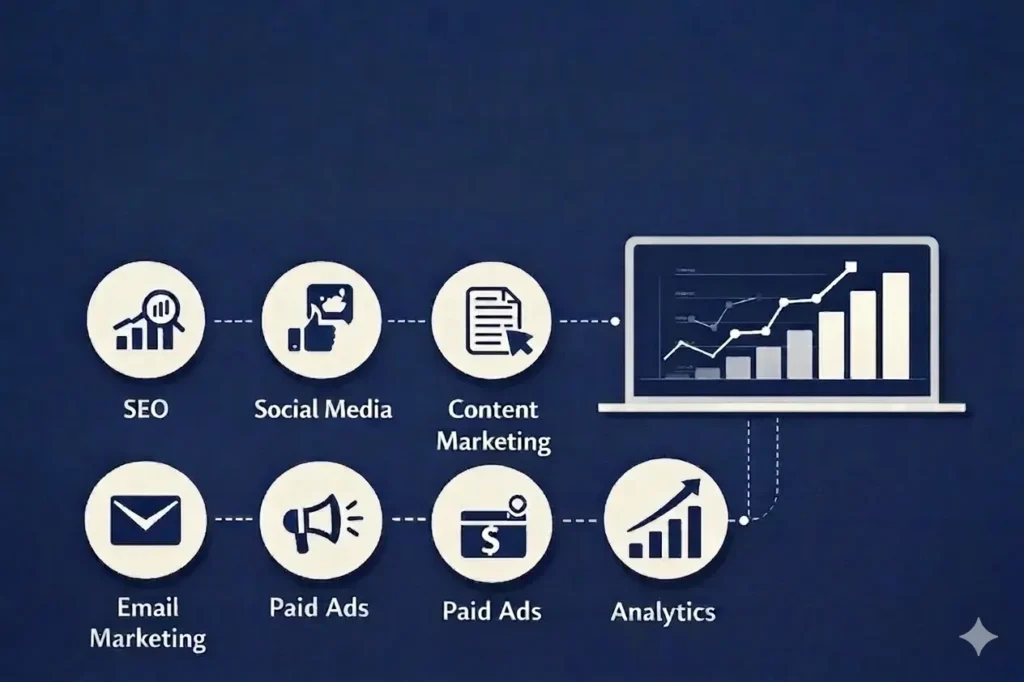
When it comes to growing a small business in 2026, understanding the key channels of digital marketing for small businesses is essential. Each channel offers unique opportunities to attract, engage, and convert customers—but the real power comes from combining them into a cohesive strategy. Let’s break down the most effective channels for small businesses and how to use them successfully.
Search Engine Optimization (SEO)
SEO remains the backbone of any digital marketing for small businesses strategy. Simply put, if your business isn’t visible on Google, it’s almost invisible to potential customers. For small businesses, SEO is a cost-effective way to compete with bigger brands and capture high-intent leads.
Optimizing your website begins with understanding what your audience is searching for. Tools like Rank Math or Ubersuggest can help identify the keywords that matter most to your local customers. From there, you’ll want to ensure your website’s titles, meta descriptions, headings, and content are all optimized to reflect these search terms. Local SEO is particularly important: maintaining a complete Google My Business profile, encouraging customer reviews, and using location-based keywords can put your business in front of customers nearby exactly when they need you.
For example, a small bakery started targeting the keyword “best cupcakes near me” while publishing weekly blog posts with recipes and baking tips. Within six months, their website consistently appeared at the top of local search results, doubling both foot traffic and online orders. The key takeaway: SEO isn’t a one-time task—it’s an ongoing process that builds visibility and trust over time.
Social Media Marketing
Social media isn’t just about posting pretty photos—it’s a powerful tool to engage directly with your audience and build a community around your brand. As part of digital marketing for Small businesses platforms like Instagram, Facebook, LinkedIn, or even TikTok, depending on where their customers spend time.
Success on social media requires consistency and strategy. Posting regularly, experimenting with formats such as Stories, Reels, and short videos, and interacting with followers helps your audience feel connected to your brand. These activities are an important part of digital marketing for small businesses because they help build trust and long-term engagement.Paid campaigns can further amplify your reach. Even small budgets can deliver big results when ads are targeted correctly.
Consider a boutique clothing store that started using Instagram Reels to showcase new arrivals and styling tips. By combining organic posts with small-budget ads targeting local fashion enthusiasts, they increased online orders by 50% within three months. The lesson here is clear: social media is about building relationships, not just broadcasting messages.
Content Marketing
Content marketing is about providing value and positioning your business as an authority. In digital marketing for small businesses, high-quality content attracts customers naturally, nurtures trust, and can significantly improve SEO. Blogs, “how-to” videos, infographics, and downloadable guides are all effective formats.
One technique often emphasized is the Skyscraper Technique: identify top-performing content in your niche and create something even more detailed, engaging, or actionable. For small businesses, this means creating content that answers your audience’s questions thoroughly, while also incorporating your unique expertise.
For instance, a local gardening shop wrote an in-depth guide on “10 Easy Plants for Beginners.” They included step-by-step instructions, care tips, and even a short video tutorial. This type of helpful resource is a great example of how digital marketing for small businesses can attract organic traffic and convert readers into customers for their gardening supplies.
Email Marketing
Email remains one of the most cost-effective channels for small businesses and is a powerful component of digital marketing for small businesses. It allows you to nurture leads, build long-term relationships, and encourage repeat sales. Collecting email addresses through lead magnets—like free guides, checklists, or discount offers—is a great way to grow your audience.
Segmenting your email list ensures that your messages are relevant and personalized, increasing engagement and conversion rates. For example, a local fitness studio sent weekly workout tips to new subscribers while offering special class discounts to long-term members. This approach strengthened their customer relationships and resulted in higher retention and sales. Tools like Mailchimp and ConvertKit make it easy to design, schedule, and track email campaigns, even with a small budget.
Paid Advertising (PPC)
Paid advertising allows small businesses to gain instant visibility and reach highly targeted audiences, making it an important part of digital marketing for small businesses. Platforms like Google Ads are ideal for capturing customers actively searching for your services, while Meta Ads (Facebook and Instagram) allow you to target specific demographics, interests, or behaviors.
Small businesses can achieve impressive results with careful targeting and small budgets. For example, a local gym ran a Meta ad campaign targeting beginners interested in fitness classes in their city. Within a month, they generated over 100 new leads without spending thousands on traditional advertising. The key is to start small, test different creatives, monitor performance, and optimize campaigns based on results.
In 2026, no single channel will guarantee success on its own. The most effective digital marketing strategies for small businesses combine SEO, social media, content marketing, email campaigns, and paid advertising. Together, these channels create a cohesive system that attracts attention, builds trust, and converts leads into loyal customers.
Digital marketing isn’t just about online visibility—it’s about creating a strategic, measurable, and sustainable growth engine for your business. Small businesses that understand how to leverage digital marketing for small businesses strategies will thrive, even in highly competitive markets.
Step-by-Step Digital Marketing Strategy for Small Businesses
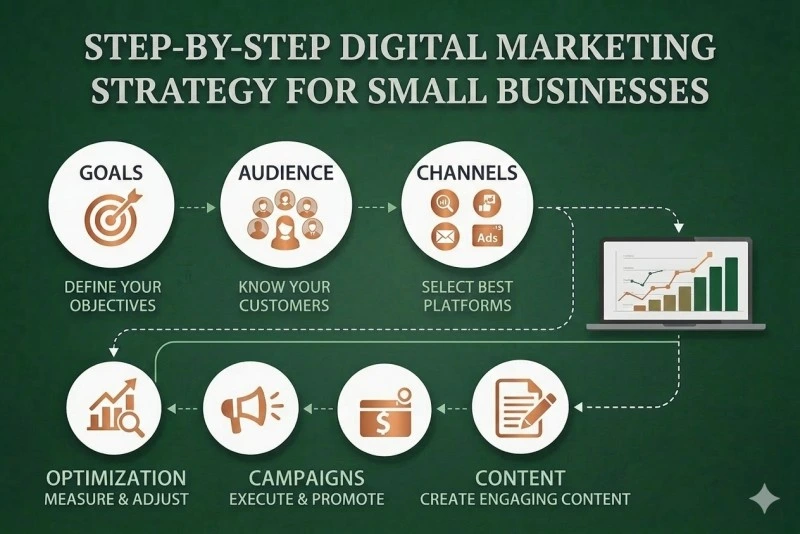
Building a strong digital marketing presence can feel overwhelming for small businesses. There are so many channels, tools, and strategies that it’s easy to get lost in the noise. But the truth is, you don’t need to do everything at once. The most successful small businesses focus on a structured, step-by-step approach that delivers measurable results.
Here’s how to approach it:
Step 1: Define Your Goals
Every effective marketing strategy starts with clarity. Are you aiming to generate leads, increase sales, grow your email list, or build brand awareness? Your goals will determine which channels and tactics to prioritize.
For instance, a boutique gym may focus on lead generation for new members, while a local café may prioritize increasing foot traffic and online orders. By clearly defining your objectives, every marketing decision—from ad campaigns to blog topics—becomes targeted and effective.
Step 2: Understand Your Audience
Knowing your audience is critical for effective digital marketing for small businesses. Who are your customers? What challenges do they face? Where do they spend time online? The more specific your understanding, the more tailored and effective your campaigns become.
We recommend creating customer personas to visualize your ideal client—their age, location, interests, online behavior, and buying habits. For instance, a local boutique might discover most of its customers are women aged 25–40 who follow fashion trends on Instagram, guiding both content creation and ad targeting.
Step 3: Choose the Right Channels
Not every channel works for every business. Focus on platforms that match your audience and goals:
- If customers search online, prioritize SEO and Google Ads.
- If your audience engages visually, use Instagram, TikTok, or YouTube.
- For nurturing leads and building long-term engagement, content marketing and email campaigns are key.
Small businesses can start with one or two channels, master them, and expand gradually. Focusing your efforts ensures better results and more efficient use of your digital marketing for small businesses budget.
Step 4: Build a Content Plan
Content is the engine of digital marketing. It attracts, educates, and converts your audience. Plan content that aligns with your business goals and addresses your audience’s questions and pain points.
A local café, for example, could create:
- Weekly blog posts on coffee brewing tips
- Instagram stories featuring daily specials
- Short videos highlighting behind-the-scenes processes
Each piece of content should deliver value, build trust, and encourage engagement. Over time, this positions your business as an authority in your niche and drives organic growth.
Step 5: Launch and Optimize Campaigns
Execution is where results happen. Launch campaigns, monitor performance, and continuously optimize. Tools like Google Analytics, Rank Math, and social media insights help track traffic, engagement, conversions, and ROI.
For example, a local gym running social media ads can test different images, captions, and targeting options to see what generates the most leads. By analyzing results and adjusting campaigns, small businesses can maximize impact of their digital marketing for small businesses strategy without increasing costs
Step 6: Measure, Refine, and Scale
Digital marketing is not static. Regularly reviewing results ensures you invest in what works. Focus on high-performing campaigns, adjust underperforming ones, and scale strategies that bring measurable results.
For instance, if Instagram Reels drive the most engagement and sign-ups for a boutique studio, allocating more resources to that platform will yield higher returns. The key is to stay data-driven, adaptable, and consistent.
Common Mistakes Small Businesses Make
Even ambitious small businesses can struggle with digital marketing if they fall into common pitfalls. Avoiding these mistakes can save time, money, and frustration while boosting results.
1. Not Defining Clear Goals
One of the biggest mistakes is starting marketing efforts without clear objectives. Posting on social media, running ads, or writing blogs without knowing what you want to achieve often leads to wasted effort and minimal results.
Successful strategies begin with asking: What are you trying to accomplish? Is it generating leads, increasing sales, growing website traffic, or building brand authority? Clear goals guide all decisions, helping prioritize channels, content, and campaigns effectively.
2. Ignoring the Target Audience
Creating content or campaigns based on assumptions rather than understanding your audience is another common error. Without knowing who your customers are—their demographics, interests, online behavior, and pain points—marketing efforts may fail to engage or convert.
Developing detailed customer personas can help. Knowing where your audience spends their time online and what type of content they value allows you to craft campaigns that resonate, saving resources while improving results.
3. Spreading Efforts Too Thin
Many businesses try to be everywhere at once—posting on multiple social media platforms, running ads on every channel, and producing content daily—without mastering any single area.
A better approach is to focus on 1–2 channels that align with your audience and business goals. Concentrating efforts allows higher-quality content, better campaign optimization, and measurable results before expanding to additional channels.
4. Underestimating SEO and Content Marketing
Some small businesses rely only on paid ads, overlooking the long-term power of SEO and content marketing. While ads provide immediate visibility, organic traffic from search engines and high-quality content builds credibility, authority, and lasting results.
Neglecting SEO means losing potential customers actively searching for your products or services. Consistent, value-driven content—like blogs, videos, and guides—positions a business as an expert in its niche and creates a sustainable growth engine.
5. Ignoring Data and Analytics
Running campaigns without monitoring performance is another common mistake. Failing to track metrics like website traffic, engagement, conversions, or ROI can result in wasted budget and missed opportunities.
Digital marketing is powerful because it is measurable. Leveraging analytics tools helps understand what’s working, optimize campaigns, and allocate resources effectively.
6. Lack of Consistency
Starting strong but failing to maintain consistent marketing efforts is a frequent issue. Irregular blog posting, sporadic social media updates, or intermittent email campaigns make it difficult to build trust and engagement.
Consistency matters. Regular, high-quality content keeps your audience engaged, improves search rankings, and gradually builds authority. Even small steps—like posting two blogs per month or sharing three social media updates weekly—can compound into significant results over time.
Avoiding these mistakes helps small businesses maximize the impact of their digital marketing efforts. Clear goals, understanding your audience, focusing on the right channels, producing valuable content, measuring performance, and maintaining consistency are the foundations of a successful strategy.
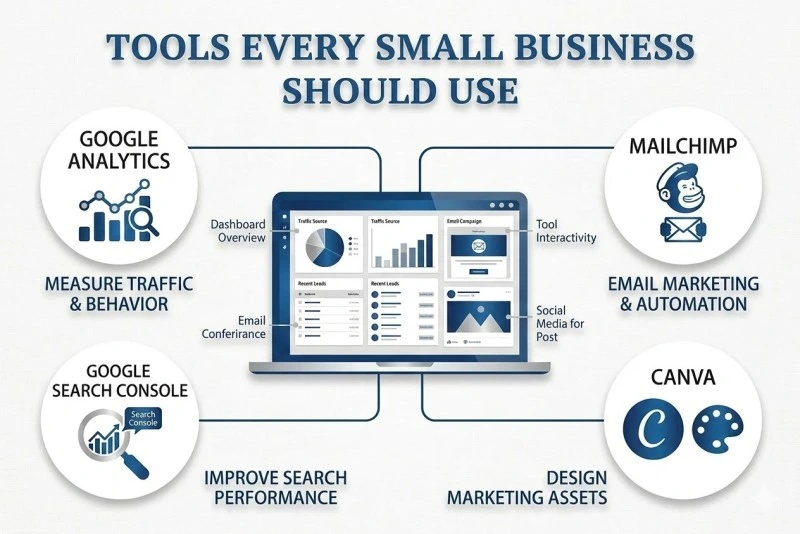
Tools Every Small Business Should Use
igital marketing can feel overwhelming without the right tools. In digital marketing for small businesses, using the right tools helps save time, optimize campaigns, and make smarter decisions.
1. SEO and Keyword Research Tools
Understanding what your audience searches for is the foundation of online visibility. SEO and keyword research tools help identify high-value search terms, track rankings, and optimize content. Popular options include:
- Google Keyword Planner – Find search volume and competition for keywords.
- Ubersuggest – Discover keywords, analyze competitors, and get content ideas.
- Rank Math or Yoast SEO – Optimize on-page SEO, meta descriptions, and titles for better search visibility.
Using these tools allows businesses to create content that aligns with user intent, drives organic traffic, and improves search engine rankings.
2. Social Media Management Tools
Managing multiple social media accounts manually can be time-consuming. Social media management tools help schedule posts, monitor engagement, and analyze performance across platforms. Popular options include:
- Buffer or Hootsuite – Schedule posts, track engagement, and manage multiple accounts from one dashboard.
- Canva – Easily create professional visuals for social media, blogs, or email campaigns.
By streamlining social media management, small businesses can maintain consistency, engage their audience effectively, and focus on strategy rather than repetitive tasks.
3. Email Marketing Platforms
Email marketing remains one of the most effective ways to nurture leads and retain customers. Email platforms allow you to segment audiences, automate campaigns, and track performance. Essential tools include:
- Mailchimp – User-friendly platform for building email campaigns and automations.
- ConvertKit – Ideal for small businesses and creators who want personalized sequences.
- ActiveCampaign – Advanced automation for businesses aiming to scale email marketing.
These tools help deliver targeted messages to your audience, improving open rates, engagement, and conversions.
4. Analytics and Tracking Tools
Measuring performance is critical to understanding what works and what doesn’t. Analytics tools provide insights into traffic, engagement, and conversions, helping businesses make informed decisions. Must-have tools include:
- Google Analytics – Tracks website traffic, user behavior, and conversion paths.
- Google Search Console – Monitors search performance and identifies SEO issues.
- Social media insights – Platforms like Instagram, Facebook, and LinkedIn provide native analytics to track engagement and audience growth.
Data-driven insights allow small businesses to optimize campaigns, focus on high-performing strategies, and reduce wasted effort.
5. Paid Advertising Tools
Paid ads can deliver instant results when managed correctly. Ad platforms allow precise targeting and performance tracking:
- Google Ads – Target users actively searching for your products or services.
- Meta Ads (Facebook & Instagram) – Reach specific audiences based on demographics, interests, and behaviors.
- LinkedIn Ads – Ideal for B2B businesses to connect with professionals.
Starting small, testing campaigns, and monitoring ROI ensures you get the best results without overspending.
By using the right combination of tools, small businesses can streamline workflows, optimize campaigns, and make smarter marketing decisions. Investing time in understanding and integrating these tools can dramatically improve efficiency, engagement, and revenue over time.
Conclusion
Digital marketing has become essential for small businesses in 2026. With consumer behavior shifting online, having a clear, structured approach is no longer optional—it’s critical for growth. From understanding your audience and selecting the right channels to creating valuable content, optimizing campaigns, and measuring results, every step contributes to building a sustainable online presence.
Avoiding common mistakes, such as unclear goals, inconsistent content, or ignoring analytics, can save time and resources while maximizing impact. Leveraging the right tools—from SEO and keyword research platforms to social media management and email marketing—makes executing campaigns more efficient and effective.
The most successful small businesses focus on strategic, data-driven, and consistent digital marketing efforts. By following a step-by-step approach, they can attract the right customers, generate leads, and grow their business in a measurable and sustainable way.
Remember, digital marketing is not just about being online; it’s about building trust, engaging your audience, and providing value consistently. Start small, stay focused, track results, and scale what works. With dedication and the right strategy, even a small business can achieve significant growth in today’s competitive digital landscape.
FAQs
1. What is digital marketing for small businesses?
Digital marketing for small businesses is the use of online channels—such as search engines, social media, email, and paid advertising—to attract, engage, and convert customers. It helps businesses reach their target audience efficiently and cost-effectively.
2. Why is digital marketing important for small businesses in 2026?
Consumer behavior has shifted online. People search for products and services before making decisions. Digital marketing allows small businesses to reach potential customers, compete with larger brands, and grow sustainably.
3. What are the main digital marketing channels for small businesses?
The main channels include SEO, social media marketing, content marketing, email marketing, and paid advertising. Each channel serves a specific purpose, from building visibility to nurturing leads and driving sales.
4. How can small businesses get started with digital marketing?
Start by defining your goals, understanding your audience, choosing the right channels, and creating a content plan. Launch campaigns gradually, track results, and optimize your strategy based on performance data.
5. Which social media platforms should small businesses focus on?
It depends on your audience. Visual businesses may focus on Instagram or TikTok, B2B companies on LinkedIn, and local businesses on Facebook. Consistency and engagement are more important than being on every platform.
6. Do small businesses need a big budget for digital marketing?
No. Digital marketing can be cost-effective. Small businesses can start with low-budget campaigns, organic social media, and content marketing while focusing on measurable results and ROI.
7. How important is SEO for small businesses?
SEO is critical. Ranking high on search engines increases visibility, drives organic traffic, and builds credibility. Local SEO is especially important for businesses targeting customers in specific locations.
8. What are common digital marketing mistakes small businesses make?
Common mistakes include not defining goals, ignoring the target audience, spreading efforts too thin, neglecting SEO, not tracking analytics, and inconsistent content creation. Avoiding these can significantly improve results.
9. Which tools should small businesses use for digital marketing?
Essential tools include Google Analytics, Google Search Console, keyword research tools like Ubersuggest, social media management tools like Buffer, and email marketing platforms like Mailchimp. These tools help streamline tasks and optimize campaigns.
10. How can small businesses measure the success of their digital marketing efforts?
Success can be measured using KPIs like website traffic, search rankings, social media engagement, lead generation, and conversion rates. Regularly analyzing performance helps optimize strategies and scale what works.